Benchmark · Cross-platform
MakeWorlds Studio on Three Platforms: Image Quality Across Public Scenes
Across nine runs on Train, Dr Johnson, and Playroom, MakeWorlds Studio records higher PSNR and SSIM and lower LPIPS than the paper reference values on Mac, Linux, and Windows. A separate cross-platform evaluation reports PSNR spreads of 0.072–0.230 dB. Together, these records describe the image quality achieved and how closely it agrees across the tested systems.
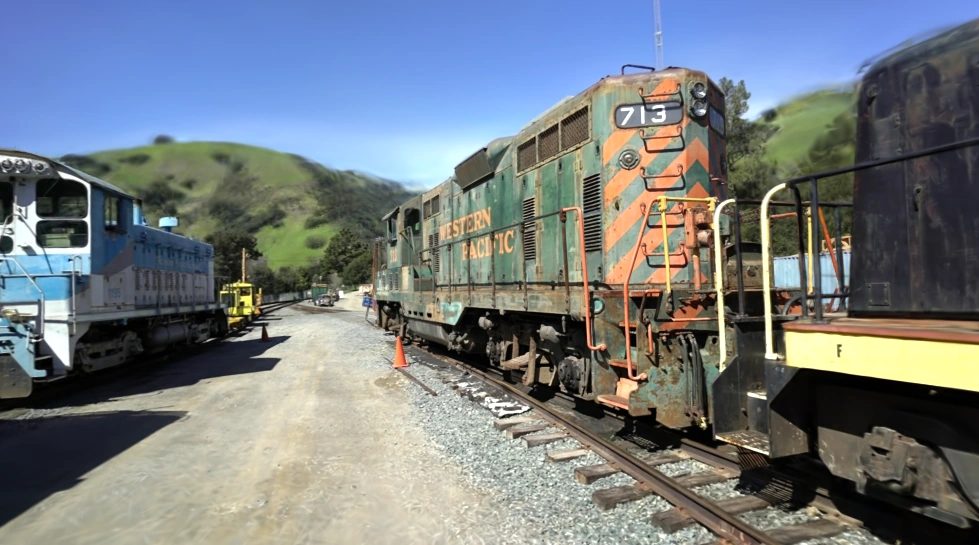
Image quality across nine recorded runs
Each row summarizes the range of differences from the paper values across three platforms. Every range lies in the favorable direction: higher PSNR and SSIM, lower LPIPS. The cases cover an outdoor locomotive scene and two interiors, assessed through pixel error, local structure, and perceptual distance.
| Public scene | PSNR ↑ / dB | SSIM ↑ | LPIPS ↓ |
|---|---|---|---|
| Train | +0.108 – +0.185 | +0.0443 – +0.0459 | −0.0652 – −0.0643 |
| Dr Johnson | +0.404 – +0.508 | +0.0105 – +0.0134 | −0.0225 – −0.0169 |
| Playroom | +0.161 – +0.391 | +0.0077 – +0.0098 | −0.0158 – −0.0142 |
Each range covers the Mac, Linux, and Windows results for one scene under the paper-comparison protocol. The references are from the original 3DGS paper; camera estimates and test-view sets differ, so the values provide context against the literature. Comparison conditions and scope Read the paper
Quality agreement across the tested configurations
For each scene, how close are the quality averages on different systems? The table below uses the separate cross-platform evaluation record and reports the highest platform mean PSNR minus the lowest. Its protocol differs from the paper comparison above, so the two tables should be read separately.
| Public scene | Cross-platform spread / dB |
|---|---|
| Train | 0.072 |
| Dr Johnson | 0.104 |
| Playroom | 0.230 |
All three PSNR spreads fall within the 0.50 dB tolerance recorded for this evaluation. This supports quality agreement for the scenes, hardware, and settings tested here.
Test conditions and sources
Mac: Apple M4 Max; Linux and Windows: NVIDIA RTX 4090
Each scene used Medium, source resolution, and 30,000 steps. MakeWorlds Studio estimated cameras from the photographs before training and producing the reconstruction. Results come from the published October 1, 2026 batch.
Connect the numbers to the reconstructions
The favorable image metrics across nine runs and the small recorded PSNR spreads support the quality demonstrated in these cases. The individual scene articles make that evidence visible: inspect numbering, grilles, and railings in Train, or cabinetry, rug patterns, and bookshelves in the indoor scenes.
Inspect the Train image comparisons · Explore detail in the indoor reconstructions
Comparison conditions and scope
These three public cases were selected because all three metrics were favorable relative to the paper references on every tested platform. MakeWorlds Studio uses its own cameras; camera estimates, test-view sets, and the full pipeline were not matched to the paper’s experiment. The data therefore do not establish a controlled algorithm ranking. Cross-platform findings apply to this batch’s scenes, hardware, and settings. Runtime, memory use, other scenes, and run-to-run confidence intervals are outside this evaluation.
Technical report and data
The technical report provides the reconstruction workflow, both evaluation protocols, and the per-platform results and sources for further inspection.
Read the MakeWorlds technical report