Benchmark · Tanks and Temples
Reconstructing Train: 301 Photos, Three Platforms
All 301 input photos were registered in the recorded Mac run of Train. The reconstruction retains readable locomotive numbers, panel divisions, and railings. Across Mac, Linux, and Windows, each run records higher PSNR and SSIM and lower LPIPS than the corresponding values in the original 3DGS paper. The comparisons below connect those results to visible scene detail.
Inspect the reconstruction from three viewpoints
These reference/render pairs come from the same Mac evaluation. Start with the front and body, switch to the oblique view for the wider arrangement, then inspect the side. Move the divider to compare individual features, with the reference photo on the left and the render on the right.
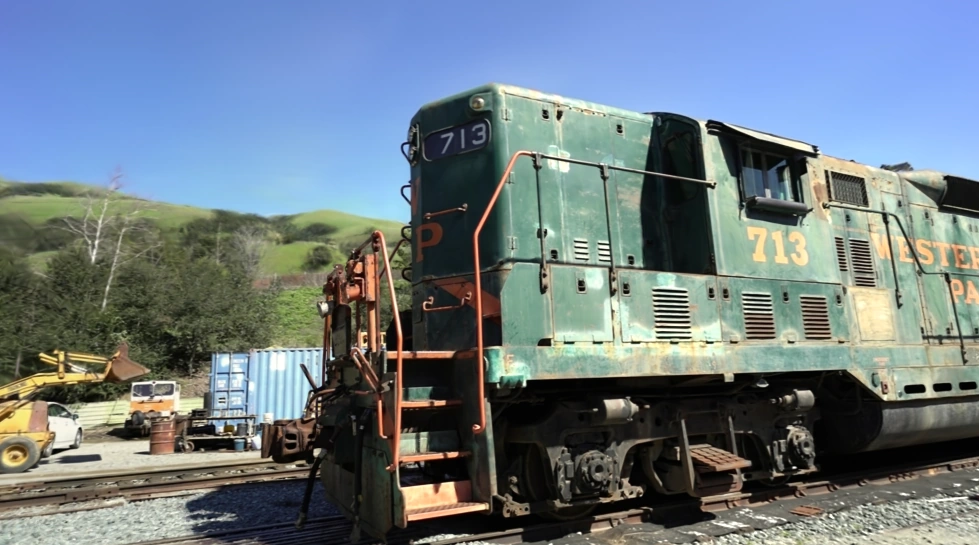
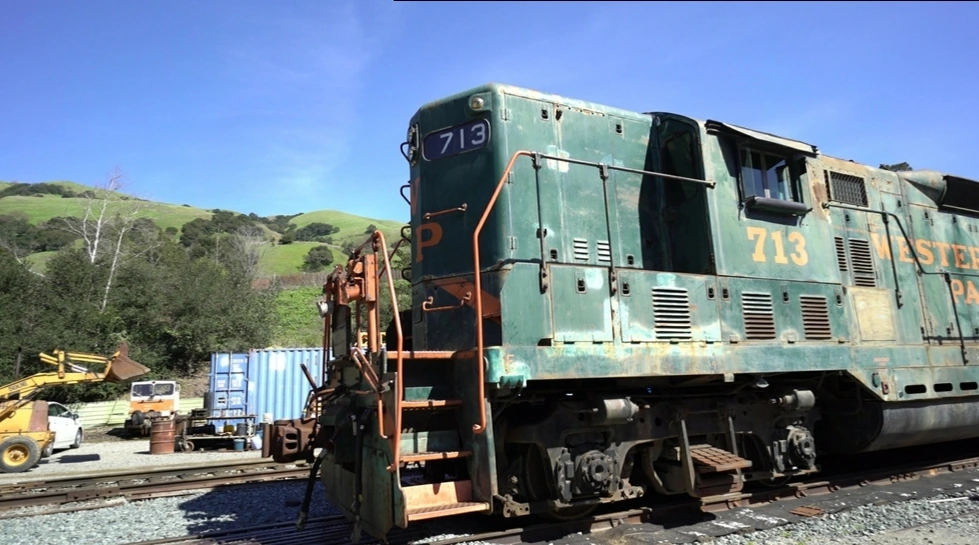
Mac · view-000009 · Front and body
The 713 numbers, panel seams, ventilation grilles, and front steps remain identifiable in the reconstructed view.
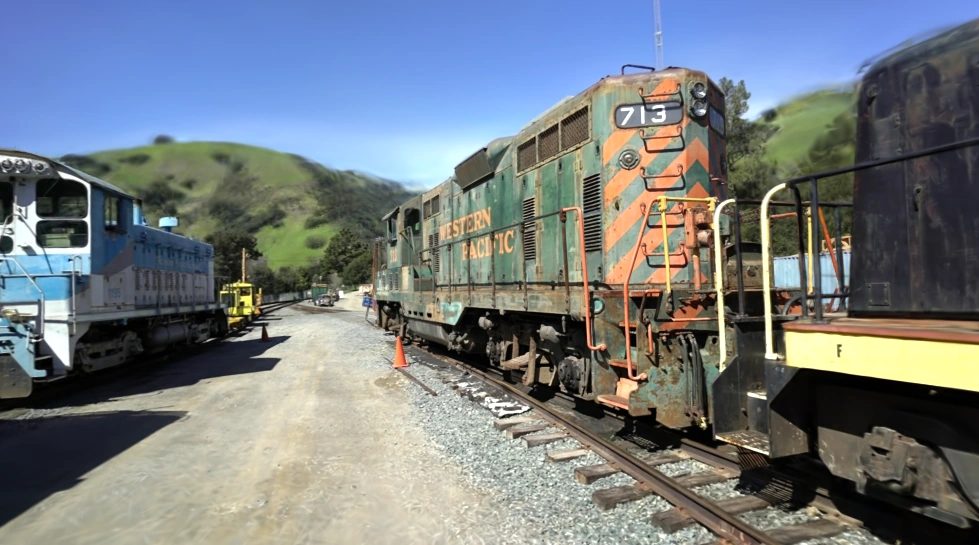
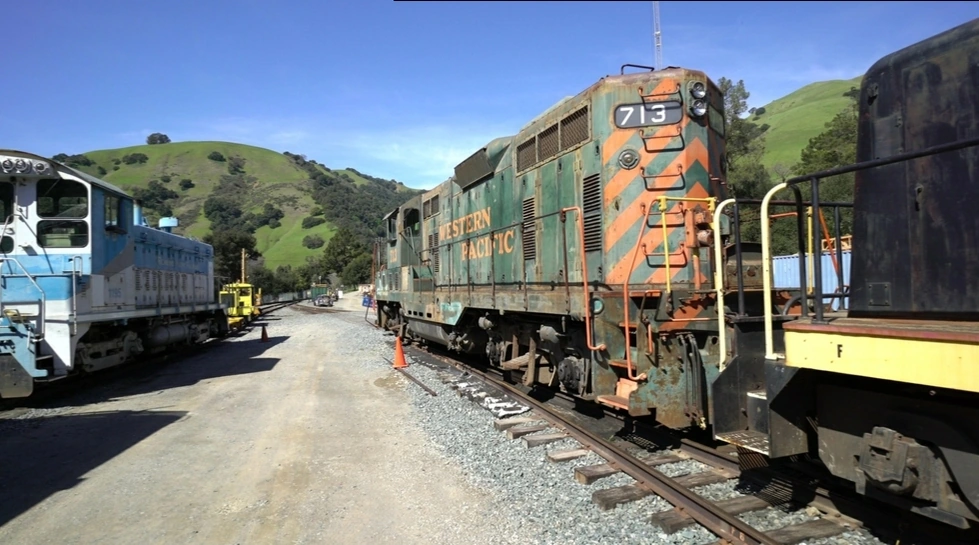
Mac · view-000057 · Oblique overview
The oblique view shows the arrangement of the locomotives, the direction of the tracks, and the striped front of the main subject.
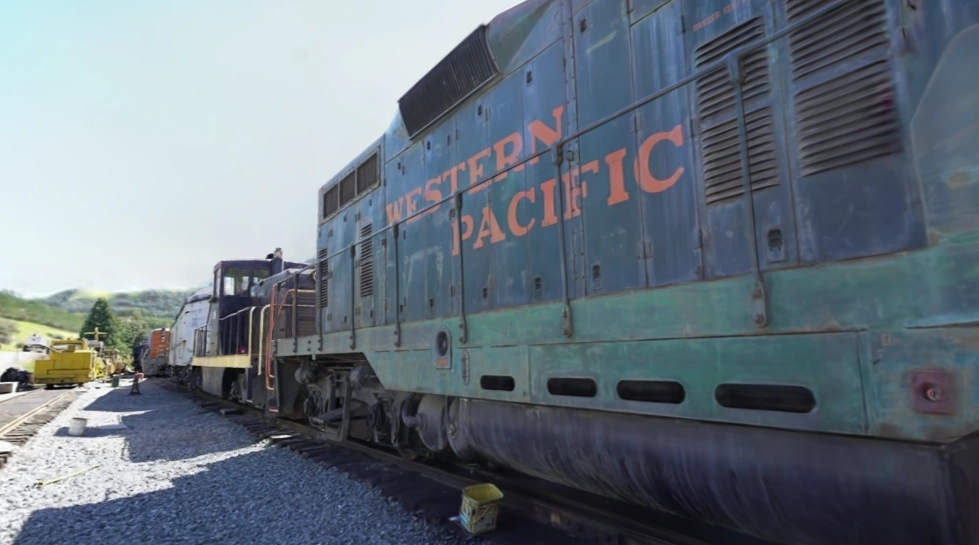
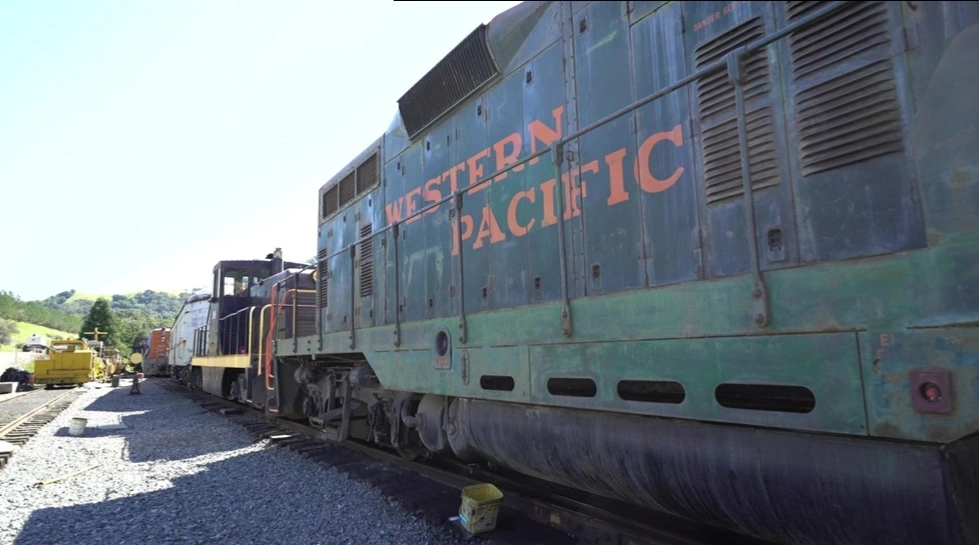
Mac · view-000249 · Side texture
Large lettering, grilles, and the long handrail are retained along the side, together with visible variations in the weathered paint.
From painted markings to narrow railings
Numbers and lettering make useful texture references. Grilles and panel seams expose repeated structure, while steps and railings show narrow outlines and overlapping parts. Together, they demonstrate retained detail at several scales within the locomotive’s overall shape.
Both close-ups use the front-and-body view, with the same crop and magnification applied to the reference and render.
Image metrics on three platforms
Every tested platform records higher PSNR and SSIM and lower LPIPS than the paper’s reported values. LPIPS is 29.5%–29.9% lower in these runs. It measures distance between perceptual image features, so the percentage describes a reduction in that metric; it is not a percentage gain in perceived image quality.
| Result | PSNR ↑ / dB | SSIM ↑ | LPIPS ↓ |
|---|---|---|---|
| 3DGS paper (reported) | 21.097 | 0.8020 | 0.2180 |
| MakeWorlds Studio · Mac | 21.227Δ +0.130 | 0.8463Δ +0.0443 | 0.1537Δ −0.0643 |
| MakeWorlds Studio · Linux | 21.282Δ +0.185 | 0.8479Δ +0.0459 | 0.1528Δ −0.0652 |
| MakeWorlds Studio · Windows | 21.205Δ +0.108 | 0.8468Δ +0.0448 | 0.1530Δ −0.0650 |
Reference values are the 30,000-step results in appendix Tables 7–9 of the original 3DGS paper. The table covers all test views. MakeWorlds Studio estimates its own cameras, and its comparison setup differs from the paper’s experiment. Comparison conditions and scope Read the paper · Tanks and Temples
Test conditions and sources
- Input
- 301 input photos; all registered in the recorded Mac run
- Settings
- Medium tier, source resolution, 30,000 steps
- Hardware
- Mac: Apple M4 Max; Linux and Windows: NVIDIA RTX 4090
- Mac evaluation
- 19 fixed test views, using cameras solved by the product.
- Images
- Selected Mac test views view-000009, view-000057 and view-000249, pairing renders and original photographs from the same evaluation.
What this case demonstrates
This Train run connects complete registration of the input photographs with a reconstruction whose numbers, body structure, and narrow components can be checked against the source images. The three-platform results support the same positive direction across the image metrics. For scene-recording work, these individual correspondences provide concrete evidence of the reconstructed subject’s appearance and layout.
Train is a selected positive case from this evaluation batch. Camera estimates, test-view sets, and the complete pipeline were not matched to the paper, so the deltas provide literature context rather than a controlled algorithm ranking. This article evaluates image fidelity; camera-motion quality, dimensional accuracy, and runtime performance require separate checks. Distant vegetation and fine ground texture still show softening in the image pairs.